

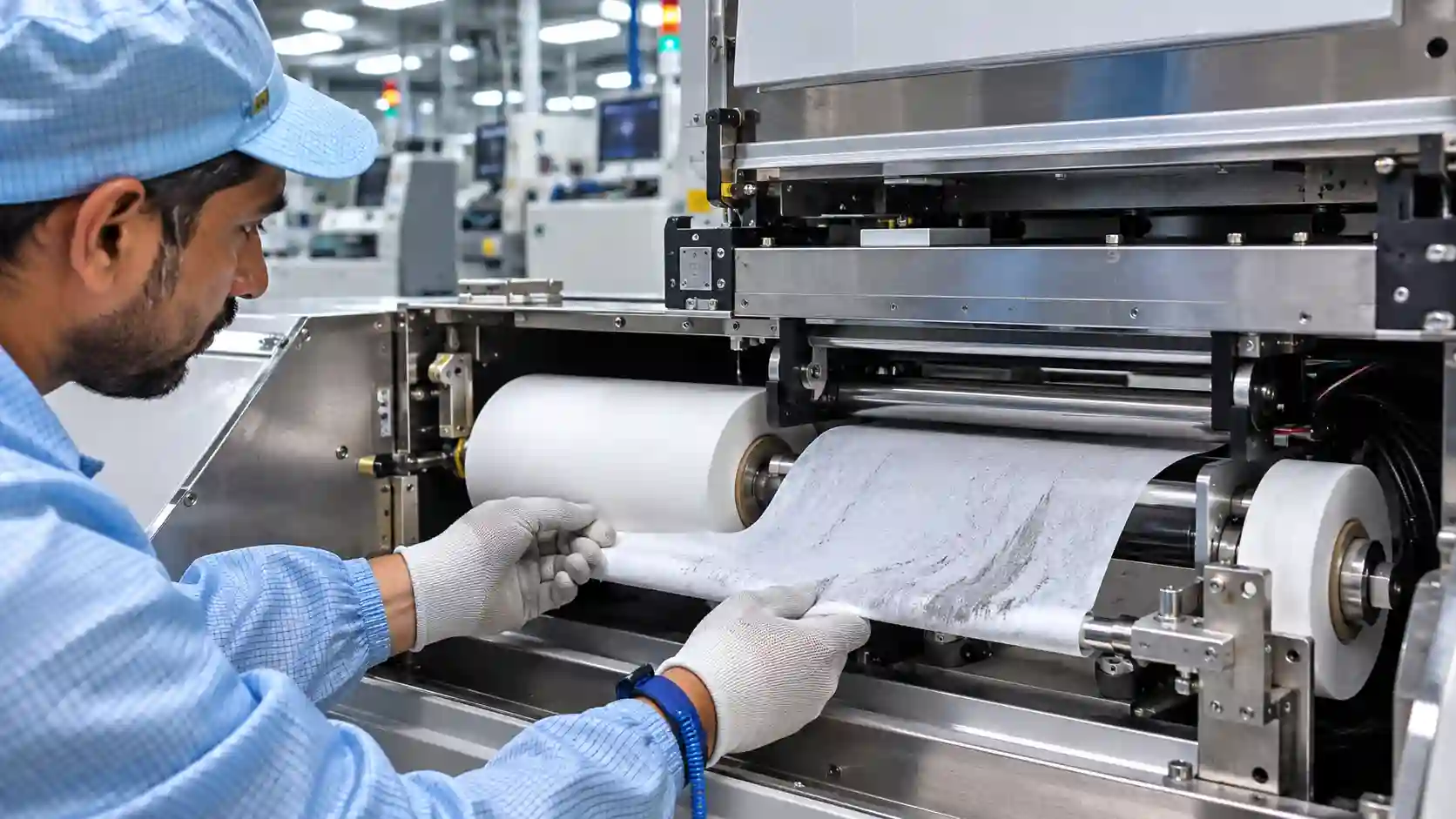
A silent hero for every SMT line is a Stencil cleaning wiper roll that never gets the credit it deserves. As every print is made, the wiper roll removes remaining solder paste from underneath the stencil. Clean stencil. Clean print. Just like that.
So when should you change it? Many teams will switch the roll on a particular day or after a set number of boards. That's speculation. A better approach is to monitor three metrics: the remaining roll length, the cleanup performance, and your printer feedback. Let's see how that applies to your SMT printing process so you can change rolls just as needed, not a moment too soon and not one second too late.
Why Is Timely Stencil Cleaning Wiper Roll Replacement Important?
It’s just like the paper towel you keep on your kitchen counter. When it's all gone, the mess stays. The same rule applies to an empty or damaged roll. The printer tries to wipe, but the paste remains underneath the stencil.
This minor issue can escalate rapidly:
- Smeared paste on the next board
- Not matched from one board to the next.
- The line suddenly stops while the roll ends halfway through a shift.
- Regular stencil cleaning roll changing ensures consistent wiping.
Timely Stencil cleaning roll replacement helps you keep even wipes. Regular wiping results in fewer print quality issues and less downtime. Good SMT printer maintenance takes very little effort, because most of the regular checks are quick.
6 Warning Signs That a Stencil Cleaning Wiper Roll Needs Replacement
Here are six things you can see, hear, or measure on the shop floor: each of these clues can tell you that your roll is empty, damaged, or not feeding properly. Now that you know these Stencil wiper roll replacement signs, you will never fear the SMT cleaning consumables again.
1. Is the Wiper Roll Running Out of Usable Material?
In addition, most have a window that shows the amount of paper left. Some display a Low roll warning. Check the take-up roll. If it’s getting full, the supply roll is almost at the end.
Don’t wait for the alarm to stop. Inspect remaining stock at the beginning of every shift. Schedule your stencil cleaning wiper roll replacement over break time, not mid-rush order.
2. Is the Wiper Material Torn, Damaged or Shedding Fibres?
Experiment with the roll and take note of this:
- Torn or frayed edges
- Holes or thin spots
- Odd fibres on the stencil or the PCB
Broken material doesn't feed well or clean well. So what matters is the low lint cleaning roll. If you notice stencil wiper roll tearing or a lot of fibre shedding, check the roll and replace before it damages the cleaning.
3. Does Solder Paste Residue Remain After Cleaning?
Check the stencil bottom after a cleaning cycle If there is solder paste residue still there or it looks to be pushed about then the cleaning is not working properly.
But don’t blame the roll just yet. Take a look at these first:
- Printer cleaning settings
- Solvent delivery
- Stencil condition
- Wiper contact against the stencil
If all other things seem fine and if the under stencil cleaning remains bad, the roll might be tired.
4. Is the Cleaning Roll Feeding or Unwinding Unevenly?
A good roll will run smoothly from wipe to wipe. Trouble signs include rough feeding, edging, tracking a roll off centre, slack winding and core misalignment. Intense issues are also significant.
These are the typical SMT wiper roll feed problems. Could be the fault of the machine. Or the shape is in fact totally wound. Before you change the shape, reseat the roll. If the stenciling cleaning roll unwinding is unbalanced, adjust it and check again.
5. Are Cleaning-Related Print Defects Increasing?
We’ve all observed smearing, bridging in the SMT print defects which are common. It can happen for all sorts of reasons so check before you start throwing stones.
Check these first:
- Using SPI data to identify trends
- Paste condition and age
- Printer settings
If the arrow indicates the back of the stencil, then you might need to look closer at the PCB stencil cleaning, and it might be that the roll is responsible.
6. Has the Roll Reached Its Planned Replacement Point?
Smart teams monitor estimated remaining wipes, monitor roll consumption rate and monitor the printer itself for replacement instructions. That's Stencil wiper roll maintenance done right.
There isn't a one size fits all number of wipes per roll per printer. Take your own notes. After a few weeks, a neat, Cleaning roll replacement schedule will start to show up.
What Factors Determine How Often a Wiper Roll Should Be Replaced?
Different lines go through wiper rolls replacement frequency. Every line uses rolls at its own pace. The following table illustrates the factor-
| Factor | How It Affects Replacement |
|---|---|
| Roll length | A longer roll lasts through more wipes |
| Automatic wiping frequency | More wipes per hour use the roll up faster |
| Cleaning mode (dry, wet or vacuum) | Each mode uses material differently |
| Paste contamination | A heavy paste load fills the roll sooner |
| Production volume | More boards mean more cleaning cycles |
| Printer compatibility | The right width and core fit keep feeding smooth |
A busy line that undergoes a lot of wet wiping will consume a SMT stencil cleaning roll faster than a small-batch line.
Common Mistakes That Lead to Premature Roll Replacement
Some rolls get changed too soon. Others are not changed the right way. Here are some of the mistakes need to avoid:
- Replacing the roll without checking cleaning settings
- Using the wrong roll dimensions
- Overlooking a fault in the feed mechanism
- Not keeping track of how much material is actually used
- These stencil wiper roll problems are money and time down the drain.
These Stencil wiper roll problems cost you money and time. High quality SMT stencil cleaning maintenance begins by diagnosing the actual problem before you take action.
Pre-Replacement Inspection Checklist for SMT Operators
Complete these items on the Stencil cleaning wiper rollchecklist before changing out a roll:
- Check the remaining material
- Roll free from tears and damage
- Winding even, with no loose layers
- Feed runs smoothly
- Cleaning result checked on the stencil
- Printer notifications detected
- Approved replacement procedure ready
If all of those boxes are checked and it’s clean, then the roll should be fine for now. Time and rolls are both saved with this style SMT printer maintenance.
How Should Operators Replace a Stencil Cleaning Wiper Roll?
Always follow the instructions of your printer maker. The steps below are just an outline.
- Follow the manufacturer's shutdown and interlock procedure.
- Remove the taken-up roll and spent material.
- Check that the core fits your printer.
- Load the new roll and feed it to the correct route.
- Run a test cycle that has been approved. Watch the feeding and watch the bottom of the stencil.
Knowing how to replace stencil cleaning roll material requires just minutes and proper SMT wiper roll installation minimizes the occurrence of jams.
Which Wiper Roll Should You Load Next?
Replacing the roll is only part of the job. Selecting the correct one completes it. The wiper roll from Reliable Spares & Consumables is designed for actual shop-floor operation:
- Very little fibre and rapidly attracts paste and solvent.
- Flattens out evenly so that each wipe cleans in the same way.
- Come neatly wound with a smooth surface, making it easy to spool and thread.
- Application of heavy-duty industrial strength material that endures after multiple wipe downs.
- Suitable for PCB assembly lines, SMT setups and repair laboratories.
- Help in reducing rework and supports the improved solder precision.
Tell us your printer’s model and core size, and we’ll help you choose the right spool.
Why Choose Reliable Spares & Consumables for Stencil Cleaning Wiper Rolls?
Reliable Spares & Consumables stock low-lint, absorbent wiper rolls for SMT printers, and can also supply Panasonic printers. We are the leading manufacturers of stencil cleaning wiper rolls, and quality is our priority.
Here is what buyers get:
- Top-notch quality, low-lint and absorbent material
- Bulk order available for busy production lines
- 24-hour safe delivery
- Help available 24 hours a day for questions
- Smooth procurement with clear quotation support
Looking for Stencil cleaning wiper roll suppliers in India? Let us know your printer name, roll size, fit & quantity on core and Reliable Spares & Consumables will help you in the first place. We make sure procurement stays fast and free of wrong orders.
FAQs
1. How often should a wiper roll be replaced?
It really depends on use, not date. Verify condition of roll, use alerts and remaining material. Perform the regularly suggested maintenance checks for your printer.
2. Can a damaged roll affect print quality?
Yes. If damaged material or miss-feeding results in less cleaning, paste may remain under the stencil. But not all problems originate on the roll, so look for other reasons as well.
3. Does one roll fit every SMT printer?
Yes. Roll width, core size and printer compatibility are all unique to each machine. These details should be checked before you change a printer roll.
4. What is a low-lint wiper roll?
The roll is made to drop almost no fibres. It maintains loose threads from sticking onto the stencil and the PCB. This is why the wipes are cleaner and more effective.
5. Can I replace the roll before the alarm?
Yes. Add a planned change when there is a break to avoid stopping in the middle. Make sure the roll is nearly finished, so you don't waste material.
6. What should I share when asking for a quote?
Tell us your printer model, roll size, core fit and quantity. This enables us to recommend the correct roll on the first time. It also reduces the need for procurement to go back and forth.
Conclusion
Six signals will tell you when it's time to change a roll: with little material left, wandering fibres and tears, excess paste, uneven feed, an increase in print faults and when you hit a drop-in point. Combine these with planned inspections and you will replace rolls at the right time, not by estimate.
|
Looking to keep your stencil and your line both clean? Request a product enquiry for the stencil cleaning wiper roll from Reliable Spares & Consumables today. |