

Time really flies by during the process on a surface mount technology production line. ESD Tester machines work at high speed; operators have to adhere to tight deadlines; and any kind of delay can influence their productivity. Nevertheless, there is still one thing that in such a rush is considered to be merely a formality – using an ESD Tester before entering the production area.
However, what should be noted is the fact that such a "formal" action actually plays a crucial role when it comes to quality control in the electronics manufacturing industry. Even the slightest discharge, which a person usually cannot feel, may silently ruin some sensitive parts. As a result, there will be failures in the production process, expensive rework and complaints from the customers.This article will discuss the most typical mistakes while using an ESD tester.
What Is an ESD Tester?
Let us first look at the importance of an ESD tester prior to discussing the common mistakes.
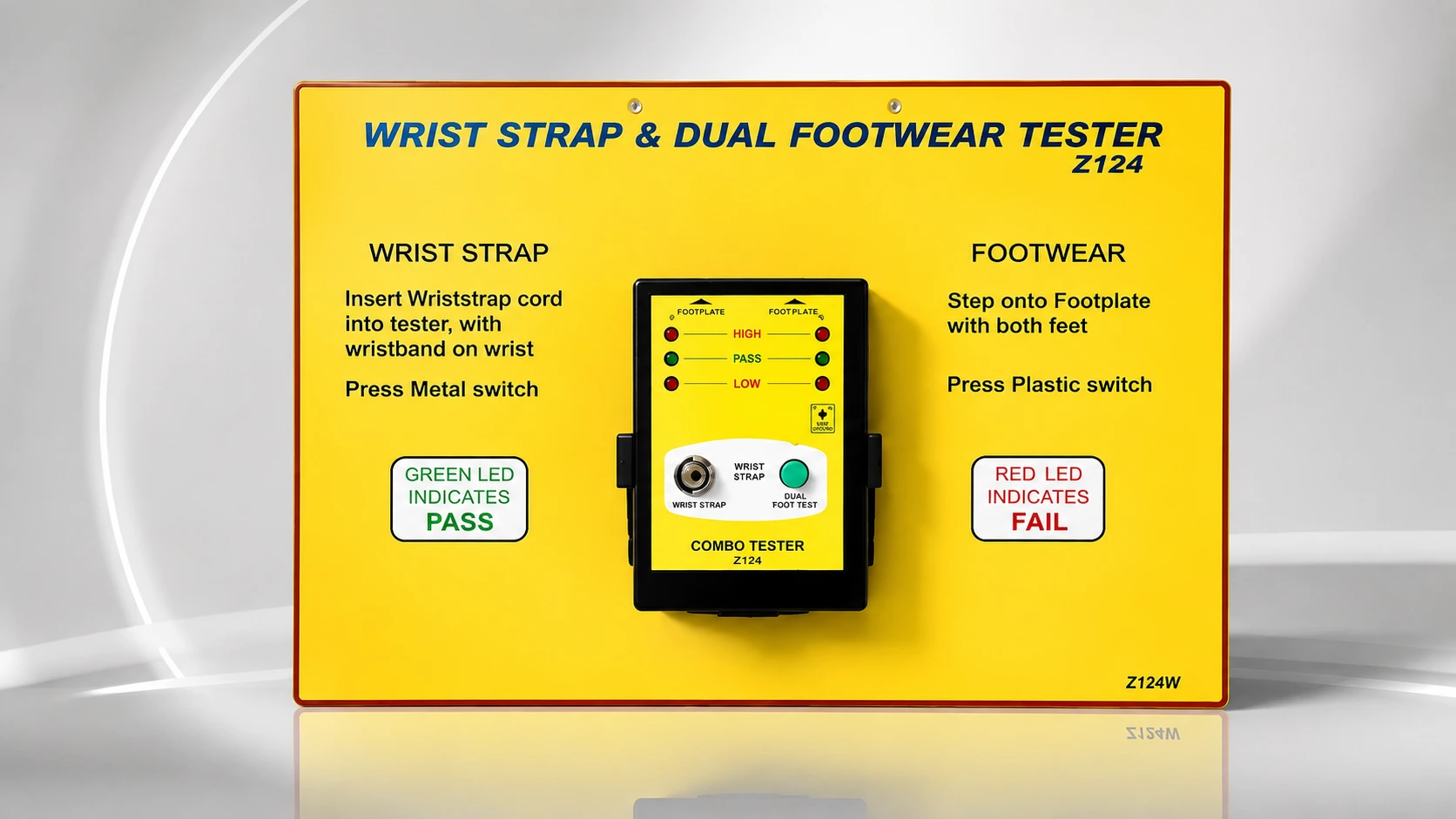
An ESD Tester is an equipment that is used to check whether the operator has been properly grounded before they start working in an Electrostatic Protected Area (EPA). The tester checks the resistance of electrostatic discharge products such as wrist straps, heel grounders, and ESD footwear in order to make sure that they will dissipate the static electricity properly.
An SMT line is very sensitive when it comes to electrostatic discharges; even a small electrostatic discharge may harm integrated circuits, sensors, and other electronic components. However, this kind of damage may not always be seen but it affects the quality of products and makes them fail after customers receive them.
Did You Know?
A static discharge as low as 30 volts can damage sensitive electronic components, but the average person doesn't even feel a static shock until it reaches around 3,000 volts. That's why ESD damage often goes unnoticed until products begin to fail.
Why Is an ESD Tester Used on an SMT Line?
An ESD tester serves as the first checkpoint before technicians begin handling sensitive electronic assemblies, helping maintain product quality from the very start.
An ESD tester is used to:
- Ensure proper grounding of technicians before they enter the SMT production line.
- Avoid electrostatic discharge which may lead to damage of electronic components.
- Identifies malfunctioning ESD accessories including damaged wrist straps and heel grounders.
Did You Know?
Not all ESD damage causes immediate failure. In many cases, it creates latent defects, where a component appears to work normally but fails weeks or even months after reaching the customer.
What is the Purpose of an ESD Tester in the SMT Line?
An ESD tester acts as the first step before the technicians start dealing with the delicate electronic assemblies.
The purposes of using an ESD tester are:
- To confirm that the technicians have been grounded properly before getting into the SMT line.
- To prevent electrostatic discharge which can destroy the delicate electronic parts.
- To identify defective ESD accessories like old wrist straps and heel grounders.
- Minimize product defects, rework, and production losses.
Mistake 1: Not Seeing It as a Necessary Step
The reason why testing exists is not merely for routine activities.
The one thing that people often fail to do when testing is take their time and pay attention to the results.Typically, technicians will place the foot on the tester, get the green light, and then simply go about their day without even thinking about whether the test has been done properly or not.
To prevent this:
- Stand with your feet in the right position during footwear testing.
- Make sure that the wrist straps have been put in properly.
- Do not neglect the warning signals you get.
- Report repeated failures.
Mistake 2: Thinking that the Tester Provides Sufficient Protection on Its Own
While an ESD tester checks whether your grounding system works properly, it won't fix any issues with other elements of your ESD protection system.
Even if you pass your morning test, you aren't protected for the rest of the day. Should a problem arise such as a disconnected grounding cord, a worn-out wrist strap, or a torn ESD mat, you are at risk of static discharges again.
A comprehensive ESD protection program requires a combination of several protection products, including:
- Wrist straps for ESD protection
- Heel grounders
- ESD mats
- Anti-static shoes
- Ionizers
Reliable Spares and Consumables provides these products to create a full ESD protection system for manufacturers.
Mistake 3: Not Paying Attention to Old ESD Accessories
In some instances, it is not the tester but the accessory attached to it that causes problems.
An ESD technician might find it difficult to pass the ESD tests several times before concluding that there is something wrong with the test device. More often than not, however, what makes it difficult to pass the ESD test is the worn-out heel ground, wrist strap, or footwear that does not work anymore.
Regular maintenance of ESD accessories is just as vital as conducting tests.
Did You Know?
An ESD wrist strap or heel grounder can gradually lose its effectiveness through daily wear and tear. Regular inspection and testing are just as important as replacing damaged accessories when needed.
Mistake 4: Not Taking the Work Environment into Consideration
Factors affecting static electricity are not only related to PPE.
Environmental elements like dry air, dust, artificial materials, and improperly grounded workplaces may contribute to the development of electrostatic discharge. Despite passing the test of electrostatic discharge, an inappropriate workplace will still pose risks for electronic parts.
Having clean workspaces, appropriate grounding, and proper environmental conditions contributes to the improvement of the overall ESD protection plan.
Mistake 5: Faulting the Tester on Each Failed Test
Before casting blame on the equipment, make sure to consider the basics.
When a test fails to yield results, it is always assumed by the technician that something wrong is going on with the tester. The process does not necessarily involve complex diagnostics, as a lot simpler problems can occur, such as loose wrist strap, dirty shoes, improper positioning, or broken grounding wire.
Before asking for any service, make sure that:
- Your ESD accessories are in a good condition.
- Your connections are secure.
- The tester is operated as prescribed by the manufacturer.
Best Practices to Practice Prior to Every SMT Line Shift
Taking a few minutes prior to starting each shift to prepare can save hours of trouble solving problems later on. Having an established ESD protocol will assist technicians in protecting components and ensuring continual production.
Prior to entering the SMT line, technicians should get into the habit of:
- Testing the wrist strap, heel grounders, or ESD protective footwear prior to beginning their job.
- Checking the ESD Tester equipment, for any signs of wear, looseness, or damage.
- Grounding the ESD mats and workstations.
- Putting on clean and proper ESD clothing for the entire shift.
Industry Insight
An ESD tester is only one part of a complete ESD control program. Grounding products, anti-static workstations, ionizers, ESD-safe packaging, and proper operator training all work together to protect sensitive electronic assemblies throughout the manufacturing process.
Selecting the Best ESD Tester for Your SMT Plant
Your best ESD tester must not only fit into your manufacturing process but must also meet your quality control requirements and blend perfectly with your ESD protection system.
As you go about the process of choosing an ESD tester, you should do more than just consider the most obvious considerations. An efficient ESD tester should be reliable, perform accurately and be easy to use in a fast-paced production environment. Comparing the ESD Tester price can certainly be considered as a routine procedure when buying one. However, putting everything else above the price would make more sense.
If you are comparing different products offered by ESD Tester Manufacturers in India, using the services of ESD Tester Suppliers in India, or even buying directly from ESD Tester Dealers in India, it is advisable to select one that will be suitable to your needs, and not necessarily go for the least expensive choice. In case you are establishing a new work station, then it may be worthwhile considering purchasing an ESD Tester kit.
About Reliable Spares and Consumables
Reliable Spares & Consumables, lead by Mr.JK Khowal, possesses 19 years of experience in the industry, including manufacturing and supplying ESD products and industrial electronics tools in India. With their own manufacturing facility and expertise, they are one of the leading providers of customized ESD solutions, soldering stations, BGA rework stations,ESD chairs, testers and ESD static control consumables that meet customer needs in the electronics manufacturing sector.Reliable Spares & Consumables manufactures the products using tested components and guarantees the best performance and lifespan with stringent in-house testing facilities and conformity to industry standards. With comprehensive OEM and bulk supplying options available, as well as a well established and efficient distribution channel nationwide. They are able to supply their goods promptly across India and improve workplace safety and productivity in offices.
FAQs
1. Why is an ESD tester important in an SMT production line?
An ESD tester helps verify that technicians are properly grounded before handling sensitive electronic components. By identifying grounding issues before work begins, it minimizes the risk of electrostatic discharge, reducing product defects, rework, and equipment damage.
2. How often should technicians use an ESD tester?
Technicians should use an ESD tester at the beginning of every shift and whenever they replace or adjust their ESD wrist strap, heel grounders, or footwear. Regular testing ensures consistent protection throughout the manufacturing process.
3. What should I do if my ESD tester shows a failed result?
If the test fails, first inspect your wrist strap, heel grounders, footwear, and grounding connections for any signs of wear or damage. If everything appears to be in good condition, repeat the test according to the recommended procedure and report the issue if the failure persists.
4.What ESD protection products does Reliable Consumables offer?
Reliable Consumables offers a comprehensive range of ESD protection solutions, including ESD testers, wrist straps, heel grounders, ESD mats, ionizers, anti-static footwear, ESD garments, cleanroom consumables, ESD-safe packaging, and other products designed to help electronics manufacturers maintain a safe and compliant production environment.
5. Why choose Reliable Consumables for ESD solutions?
Reliable Consumables focuses on providing high-quality ESD control products that support efficient and reliable electronics manufacturing. With a wide product portfolio, industry expertise, and a commitment to quality, the company helps businesses build complete static-control systems tailored to their operational needs.
Conclusion
The ESD tester can be one of the smallest units on an SMT assembly line, but its role in quality production is significant. Most ESD failures are not related to faulty equipment; they are due to hasty testing, used-up accessories, lack of maintenance, or improper practices.
Avoiding such mistakes and applying proper testing techniques can help eliminate expensive defects, ensure product reliability, and preserve sensitive electronic components during the production process.
We at Reliable Spares and Consumables consider ESD protection not only about using the right products but also following the right practices. Our wide range of products includes ESD testers, wrist straps, anti-static mats, ionizers, cleanroom consumables, and other ESD protection products to develop a reliable static control system for modern electronics manufacturing.
Do you need reliable ESD solutions for your SMT facility? Find all the required ESD protection products at Reliable Spares and Consumables. Contact Us Today!