

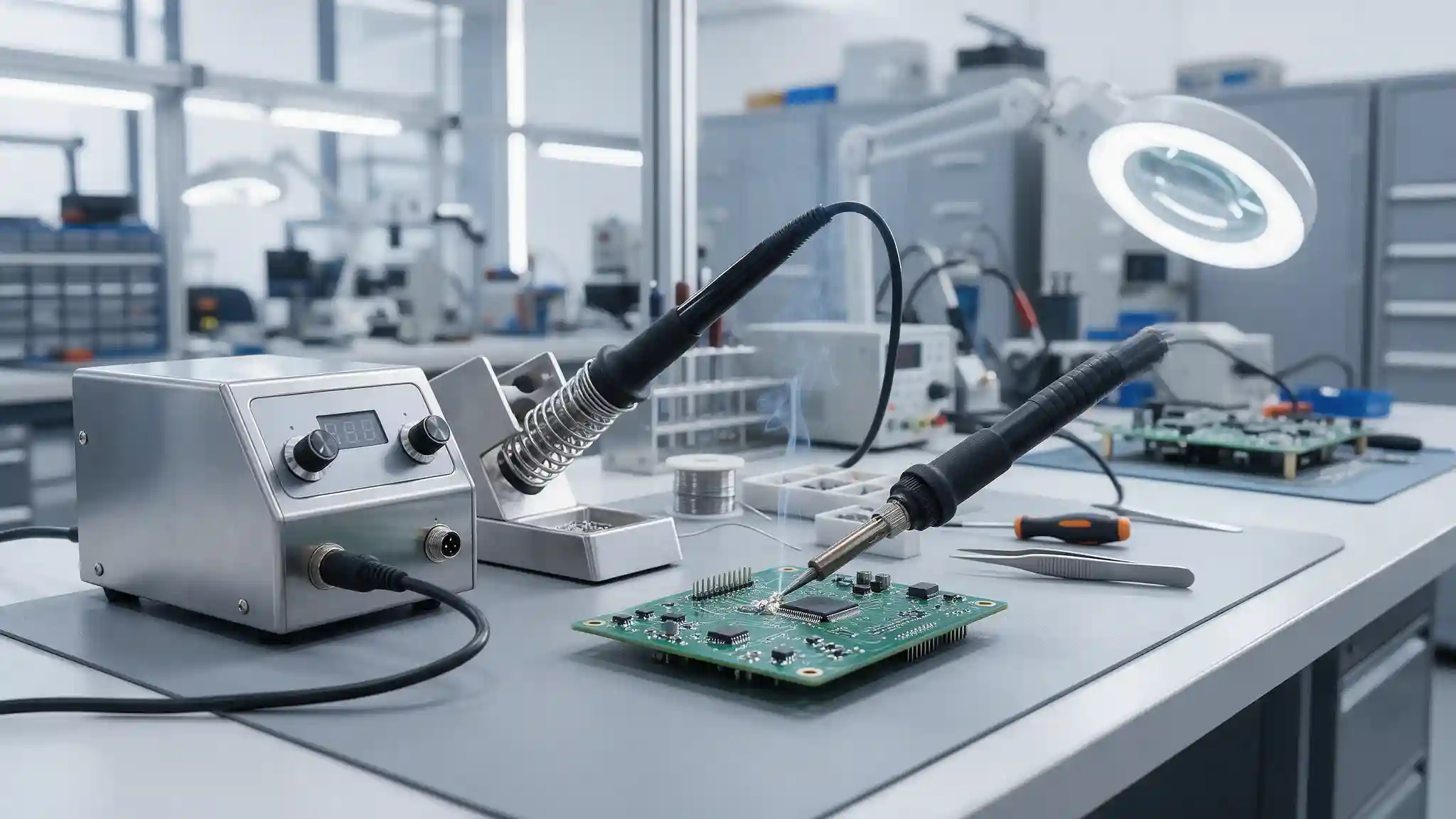
A PCB is only as reliable as its weakest link. A single failure of a cold or overheated connection can result in sporadic issues that can take hours to determine. That's why a Soldering Station is a tool that is more than a bench accessory. Provides a consistent heat, control and repeatability to operators.
This blog details how a station enhances joint quality, safeguards parts and maintains production consistency. It also includes practical tips and Bakon models which are appropriate for electronics assembly and repair and the correct PCB soldering equipment.
Why Soldering Quality Matters in PCB Assembly
Soldered joints transmit both electrical and mechanical forces. If they don't, the entire board will suffer. A cold joint is a dull, coarse joint, and may fracture under vibration. Excessive heat will cause pads to rise, damage laminate or strain fragile components. Rework, Scrap and Field returns result from inconsistent joints.
Proper Soldering Quality requires a good control of heat. Electronic and SMD components are small and sensitive to temperature; a few seconds at the wrong temperature can damage them. For reliable PCB assembly, joints must have a uniform, shiny appearance and be clean, from first board to last.
How a Soldering Station Works
The Soldering Station is a "closed loop" where one component passes heat to the next so the heat at the joint is controlled.
- The heating element and the tip are placed in the hand piece.
- A temperature controller keeps track of the temperature, and regulates the power to maintain set temperature.
- The heating is transferred to the joint from the end of the tip.
- The tip, when making contact with the pad and lead, transfers heat to the metal, which melts the solder.
- The controller will then replenish the lost heat.
It is this loop that makes a temperature controlled soldering station more reliable than a simple iron, and allows the operator to concentrate on technique.
How Soldering Stations Improve PCB Assembly Quality
A Professional Soldering Station makes the results five-fold better. Each relates directly to joint quality or safety of component or assembly line consistency. Let's go through each of the benefits individually.
1. Stable Temperature Helps Create Consistent Solder Joints
The melting point of solder is very close. If it is too low, the joint will get cold. Too much, and flux will burn off and pads will be damaged. A station maintains the set temperature. The key to good Soldering Temperature Control is the ability to treat every soldering joint the same. That results in Consistent Solder Joints throughout a complete shift — even when doing the same work over and over. The uniform joints also make it easier to visually inspect: Defects will stand out easily against a predictable finish.
2. Fast Heat Recovery Supports Continuous Production
All of the joints extract heat from the tip. That loss accumulates rapidly in repetitive work. The fast heat recovery soldering station returns the tip to the set temperature rapidly, allowing the next joint to start at the same temperature as the previous one. This is important during the Electronics Production process for operators who solder numerous points per board. A well-designed industrial station ensures that things happen at a consistent pace, rather than having to increase the temperature to make up for it.
3. Controlled Heat Reduces Component Damage
Components such as capacitors, ICs and SMD devices can overheat and fail without warning. Damage can have no visible signs on the bench. It manifests later as drift or faults, and early failure. Thermal stress is controlled by the controlled heat that maintains the temperature of the tip at the desired temperature without more. In addition to the foregoing, Temperature Controlled Soldering can reduce dwell time, further aiding PCB Component Protection in delicate fine pitch or heat-sensitive electronic component applications.
4. ESD-Safe Design Helps Protect Sensitive Electronics
Although static discharge is invisible, it can destroy semiconductors in a flash. Even worse, it can be latent, pass the test and fail in the field. An ESD Safe Soldering Station is manufactured from grounding and static safe materials that provide a solution to holding charge back from the work area. When combined with wrist straps and mats it is part of an overall ESD Protection regimen, crucial when dealing with sensitive PCBs and parts.
5. Interchangeable Tips Improve Soldering Precision
No one tip fits all joints. Small pads and fine pitch parts can be handled by fine conical tips. The larger chisel tips provide more heat to the connectors and through-hole leads. Interchangeable Soldering tips allow for the operator to be able to use the right tip for the job. This translates to cleaner contact, higher control and precision soldering in normal soldering and rework applications. The following are fewer lifted pads and bridged pins.
Using Bakon Soldering Stations for PCB Assembly
Bakon is a trusted brand in the professional soldering equipment for electronics assembly and repair industry. Bakon Soldering Station models are designed to accommodate PCB work, and have features that are important on a busy bench: temperature control, reliable heating performance, and ESD considerations. These stations are ideal for assembly lines, service counters as well as R&D labs.
Need to match a model to your tasks, component size and volume on a daily basis, the team at Reliable Consumables can help. By comparing the Professional Soldering Equipment to those requirements, you can steer clear of superfluous features that you won't make use of.
1. Bakon BK3300A Soldering Station
Bakon BK3300A soldering station is designed to fit for precision PCB soldering and electronics repair work. It has a combination of efficient heating, accurate temperature control, user-friendly operation and ESD protection. These characteristics make operators more comfortable to work with for extended periods of play and maintain joints consistent. Works on repair benches and assembly tables. When comparing options, the product page confirms the specifications of the BK3300A Soldering Station.
2. Soldering Station Bakon BK1000
Another option for PCB assembly teams is the Soldering Station Bakon BK1000. Ideal for applications requiring controlled heating, easy operator handling and repeatability in repetitive solder applications. Use it wherever you think it is appropriate, given your workload and type of components. Specifications can be best confirmed on the product page along with other Bakon soldering equipment from Reliable Consumables.
Where Soldering Stations Are Used in the Electronics Industry
The soldering station is used everywhere throughout the PCB Assembly Industry, from the manufacture to the repair and testing. Typical settings include:
- In Electronics Manufacturing, consistency is paramount, and PCB assembly lines are where it counts.
- EMS facilities with different sized batches on contract.
- Electronics OEMs create prototypes and units for production.
- Repair and rework work benches using electronics repair tools
- Auto electronics/telecom equipment assembly
- Automated industrial controllers and panels
All of these environments require repeatable, reliable joints and handling of delicate components.
Best Practices for Better PCB Soldering Results
Bad habits don't work well with good equipment. These PCB Soldering Tips and Soldering Best Practices make a visible difference to joint quality:
- Apply appropriate tip size and type for each joint
- Choose an appropriate temperature for solder alloy and component
- Use clean and tinned tips to ensure good heat transfer
- Do not over dwell, can lift pads and stress parts.
- Keep the station in good condition and change tips as necessary to prevent them from adversely affecting results.
- Follow ESD procedures: including grounded wrist straps and mats.
Conclusion
The key to better PCB assembly is to get the heat under control. Joints are uniform due to the temperature stability. Rapid heat recovery can help maintain a constant output. ESD protection is used to protect sensitive parts. The last two pieces are the tip and the model. When it comes to a PCB Soldering Station for your team, check out the Bakon Range at Reliable Consumables. For model information and specifications, see the Bakon Soldering Station product page.
| Looking for a new PCB Soldering Station? Visit the Bakon soldering stations at Reliable Consumables, or talk to our staff today about which Bakon soldering station is right for your assembly or repair requirements. |
Frequently Asked Questions About Soldering Stations
Still have questions? These short answers cover what buyers and operators ask most often about soldering stations and PCB soldering, so you can decide with confidence.
1. What is a soldering station used for in PCB assembly?
A soldering station provides controlled, stable heat for joining components to a PCB. It helps operators create reliable joints during PCB assembly, rework, and repair without overheating the board or parts.
2. Why is temperature control important in a soldering station?
Temperature control keeps heat within the range the solder and components need. This prevents cold joints and overheating, protects pads and parts, and keeps results consistent from one joint to the next.
3. Is an ESD-safe soldering station important for PCB work?
Yes. Static discharge can damage semiconductors without visible signs. An ESD-safe station, used with grounding accessories, helps protect sensitive components and supports reliable results during PCB soldering.
4. What is the Bakon BK3300A Soldering Station used for?
The Bakon BK3300A suits professional electronics soldering, PCB assembly, and repair work. It is positioned around efficient heating, precise temperature management, ergonomic handling, and ESD safety. Check the product page for verified specifications.
5. How often should a soldering station be maintained?
Routine soldering station maintenance includes cleaning and re-tinning the tip, inspecting the cable and handpiece, checking temperature accuracy, and storing the station safely. Clean tips every session; schedule other checks by usage.
6. How do I choose the right soldering station for PCB work?
Consider your component sizes, daily volume, temperature control, ESD protection, and tip availability. Compare models such as the Bakon BK3300A and Bakon BK1000 on the product pages before deciding.