

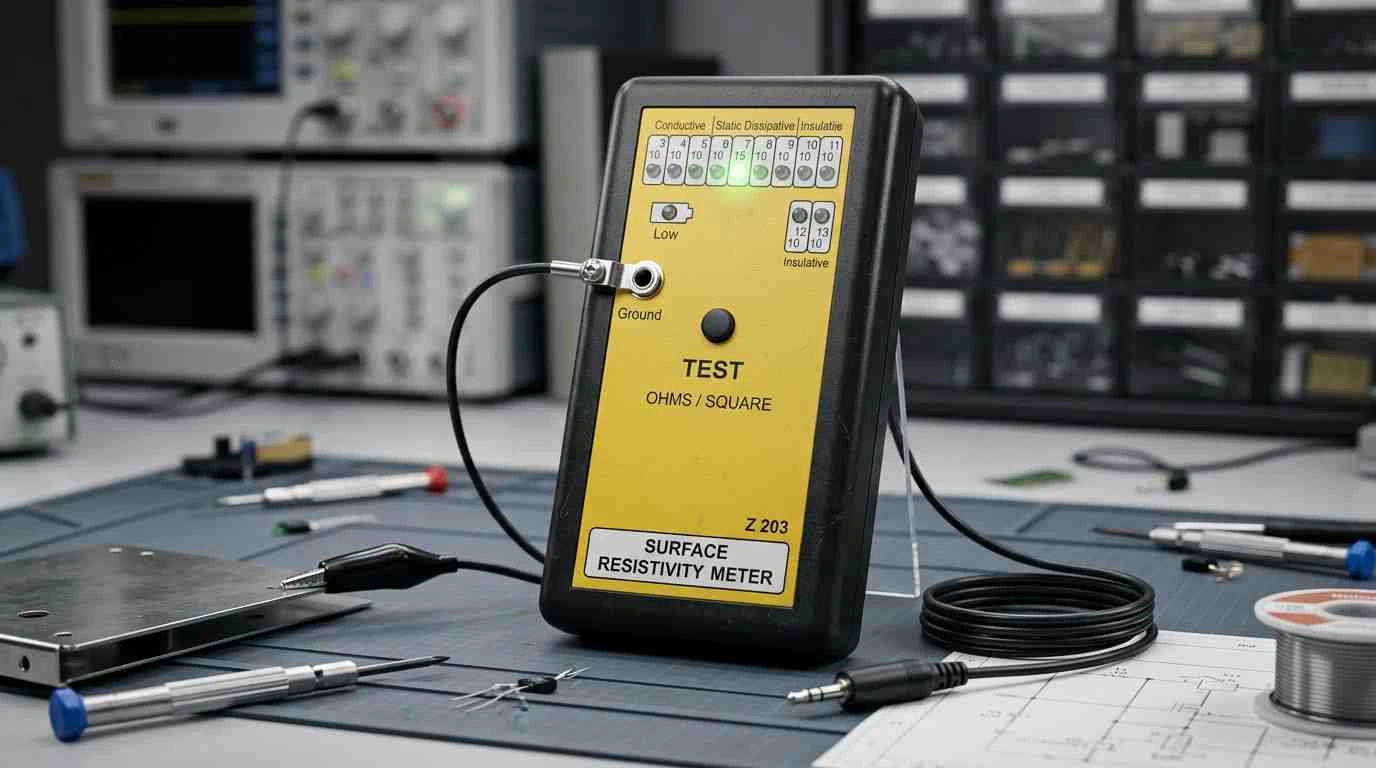
If you are considering investing in resistance meters, you need to select the right product. The following blog will tell you everything about resistance meters.
What is a “resistance meter”?
A resistance meter is a device that is used in various industries with the same intention: to measure the electricity units and prevent any kind of mishaps, ensure safety, and maintain accuracy while working.
This electrical instrument is easy to maintain. Here are some ways:
- Routine calibration
- Proper probe placement is necessary for accurate results.
- Low-resistance measurements
The ohm meter helps to identify faults and ensure that electrical equipment functions properly.
Fun Fact: “By touching the probes with your fingers, an ohmmeter can measure the electrical resistance of your body.”
List the types of resistance metres.
Here is the list of types related to resistance metres:
- Digital Resistance Meters
- Surface Resistivity Meters
- Micro ohmmeter
- Ground Resistance Testers
- Analog Resistance Meter
- Insulation Resistance Testers
While selecting resistance meters for different industries, make sure to check the Resistance Meter Price.
Here is another blog you might be interested in.
ESD Tester Calibration 101: Why Your "Safe" Reading Might Be a Lie
State the application of the resistance meter.
The following are the applications of the resistance meter:
- Laboratory
- Telecommunication Systems
- Grounding System Testing Unit
- Power generation sector
- Equipment maintenance area
- Power Plant industries
A Resistivity Meter is totally different from a resistance meter because a resistivity meter is used to measure the resistivity of soil and materials, which helps to evaluate grounding system performance and to know soil characteristics whereas resistance metres are used to measure the electricity in a circuit.
Did you know? “Megger" is a Special Type of Meter: A Megohmmeter, often referred to as a "Megger" is specialized for testing high-voltage insulation.”
Technical Specification
The following table talks about the technical specification of the resistance meter.
| Parameter | Technical Specification |
|---|---|
| Measurement Type | Electrical resistance and insulation resistance measurement |
| Resistance Measurement Range | Supports measurements from low resistance to high resistance level |
| Accuracy | High-accuracy measurement capability for reliable results |
| Resolution | Fine resolution for detecting small resistance changes |
| Parameter | Details |
| Test Voltage | Multiple selectable test voltage options |
| Display Type | Clear digital LCD display for easy reading |
| Data Storage | Internal memory for storing measurement data |
| Power Supply | Battery-operated or rechargeable power source |
| Operating Temperature | Suitable for operation in a wide range of environmental conditions |
| Storage Temperature | Designed to withstand various storage environments |
| Safety Rating | Built according to electrical safety standards |
| Overload Protection | Protection against voltage and current overload |
| Build Quality | Durable and rugged construction for industrial use |
| Portability | Lightweight and portable design for field testing |
What are the features of a resistance meter?
Here are some of the features:
- Digital Display
- Data-Storing Capacity
- Safety Protection System
- Temperature balancing
- Compact Design
- Auto-discharge system
Earth resistance tester helps to prevent any electric shocks, equipment damage, and electrical faults and ensures everyone’s safety.
Here is another blog you might be interested in.
Understanding the Importance of ESD Chairs Essential for High-Tech Manufacturing Industries
Who provides the best resistance meter in India?
Reliable Spares and Consumables provides the best resistance meter in India. They ensure that each batch is designed with stable measurement technology, easy operation, and strong build quality, which makes them suitable for factories, testing labs, power facilities, etc.
Choosing resistance metres is accurate for the high-voltage industries, which help to check electrical circuits, equipment, and grounding systems, which ensures safety for everyone.
Here are the most asked questions related to resistance metres.
FAQs
Q1. Who is the future of the resistance meter?
Reliable Spares and Consumables is the future of the resistance meter. They ensure accuracy, durability, and meet the industrial standards.
Q2. What factors should be considered while selecting resistance meters manufacturers?
Here are some of the factors that need to be considered while selecting Resistance Meters Manufacturers in India:
- Competitive pricing
- Local technical support
- Reliable after-sales service
- Meet industry standards
Q3. List any two benefits of the resistance meter.
Here are 2 benefits of resistance meters:
- It helps to detect any kind of faulty or loose connections.
- While working reduces the risk of overheating and breakdowns and prevents any mishaps.
Q4. What is the other name of the resistance meter?
Ohm meter is the other name for the resistance meter.
Q5. My friend is going to purchase a resistance meter, but don’t know how to choose the right resistance meter. What should I tell him?
You can tell him the ways of choosing the right resistance meters:
- According to use, choose the resistance meters range.
- The display should be clear and easy to operate.
- Check the meter reading correctly; that should be accurate and reliable.
Q6. What factors affect the pricing strategy of the resistance meter price?
Here are some of the factors that affect Resistance Meter Price:
- Measurement range
- Accuracy level
- Brand reputation
- Digital or analog features
- Data storage
- Proper connectivity
Conclusion
By now, you must have understood what resistance meters are, their features, and their applications. If you consider investing in resistance meters, Reliable Spares and Consumables is the perfect choice. The brand also offers ESD Chairs, ESD trolleys, solder masks, stencil-cleaning rolls, and much more.
To know more information, Contact Us.