

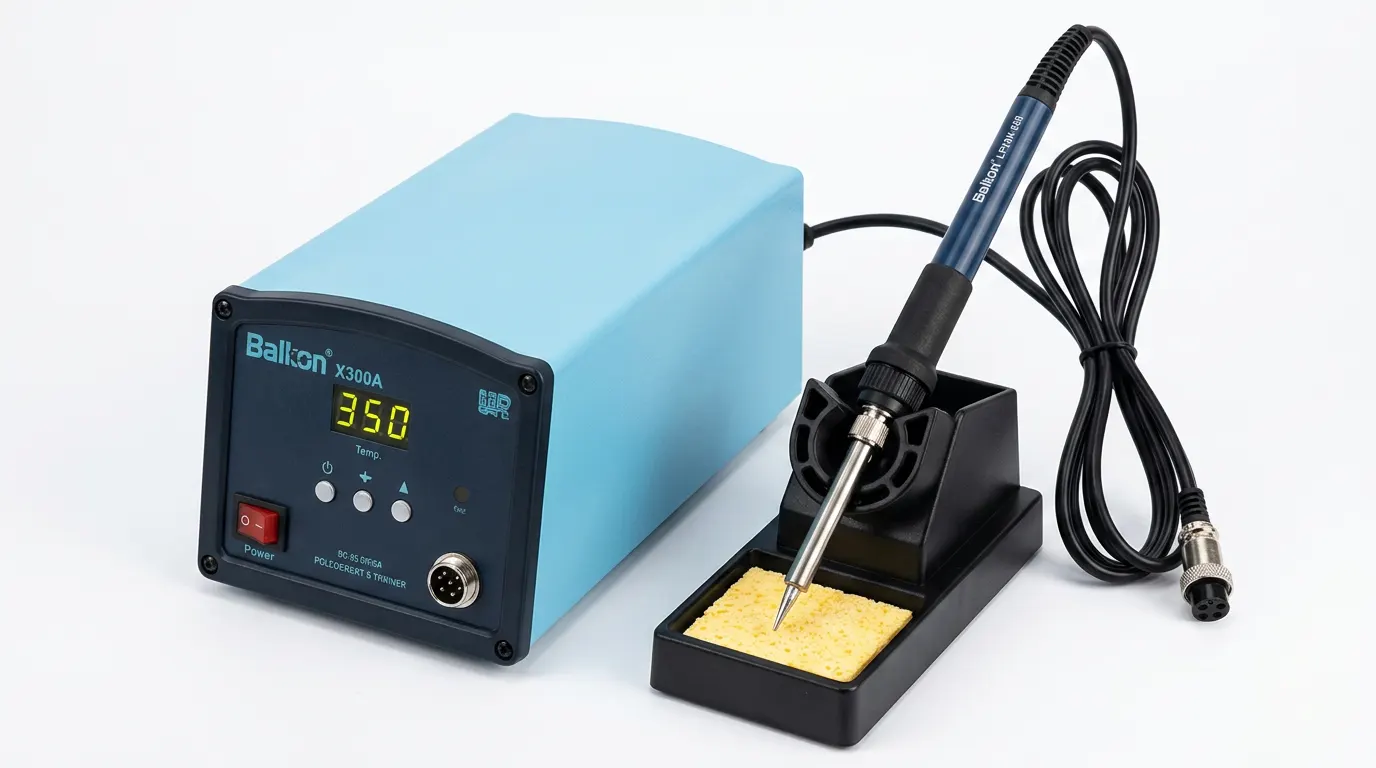
It can be a complicated multi-layer PCB or a single through-hole board, but the quality of your soldering work can determine the success of your product. Solder joint defects do not simply impact performance but can result in total product failures, rework, and customer dissatisfaction. Knowledge of the most common types of solder defects, their underlying causes, and preventive measures is one of the most useful skills that could be possessed by any electronics assembly professional.
This guide will take you through the main types of defects you will find in the actual PCB assembly process and provide practical information to enhance the quality of your solder joints and minimize your rework.
Why Solder Joint Quality Matters
A good solder joint is not merely a piece of solder holding a part in place but an electrical and mechanical connection that should last years of use through temperature swings and mechanical abuse. A solder joint quality is usually not noticed when a simple visual check is conducted and only manifests itself through intermittent failures in the field.
It is due to this that the recent electronics production is dependent on a mixture of talented operators, precise machinery, and comprehensive inspection methods to identify manufacturing flaws before the finished products are shipped to final consumers.
Types of Solder Defects Explained
We shall discuss the most common defects observed during PCB assembly, their reasons, and how to remedy or prevent them.
1. Solder Bridging
Bridging is a short circuit in which solder is placed between two pads or leads which are not intended to be electrically connected. This is among the most prevalent errors in fine-pitch assembly of SMD components.
What causes it:
- Too much solder paste used in screen printing.
- Ineffective reflow temperature profile.
- Stencil is not aligned with the paste application.
- Inaccuracies in Component placement.
How to prevent it:
- Regularly calibrate your aperture size and stencil thickness.
- Optimise your reflow profile for the specific board and component types.
- Have an appropriate flux to enhance the flow of solder.
2. Tombstoning
Tombstoning — also known as the Manhattan effect — occurs when a small SMD part, such as a 0402 or 0201 resistor, is reflowed and is standing up on that end. This leaves one pad without being soldered.
What causes it:
- Inequalities in the wetting forces on both pads during reflow.
- Pad size imbalance – one pad bigger than the other.
- Nonuniform heating of the PCB.
- Excessively fast increase of temperature in the reflow area.
How to prevent it:
- Pad sizes should be symmetrical and IPC-standard.
- Fine-tune your reflow oven zone temperatures.
- Slow, controlled ramp-up rate during reflow.
- Check accuracy of component placement prior to reflow.
3. Cold Solder Joints
A cold joint occurs when the solder does not melt completely and flow and leaves the connection dull, grained, or rough. Such joints might look good aesthetically but collapse during light loads or thermal cycles.
What causes it:
- Low temperature of Soldering Iron.
- Short dwell time – insufficient heat on the joint.
- Movement of the component or board in solidifying solder.
- Surfaces that are dirty or rusted.
How to prevent it:
- Before soldering connections, preheat pads and leads with a Soldering Iron to help create a cleaner joint.
- Adjust the temperature of your Soldering Iron to maintain a correct tip temperature.
- Clamp parts in place until the joint is completely solid.
- Apply good flux to clean surfaces.
4. Voids in Solder Joints
Voids are gas pockets that are confined within a solder joint. Though small voids may be tolerated, large or multiple voids lower the mechanical strength and thermal conductivity of the joint – which is a serious issue in high-power assemblies.
What causes it:
- Flux outgassing in reflow – gas is trapped until solder is solid.
- Wet solder paste or PCB.
- Incorrect reflow profile – too rapid a rise over liquidus.
How to prevent it:
- Operate with a reflow profile that is well optimised and has the correct soak zone.
- Solder paste in the store is proper and observes its shelf life.
- Wipe off PCBs when they are stored in a wet environment.
- Perform a post-reflow inspection of BGA and QFN joints using X-ray.
5. Blowholes and Pinholes
Blowholes appear as holes or holes on the surface of solder. They are brought about by the gases escaping off the joint as the solder begins to solidify - a hole is visible in the completed joint.
What causes it:
- Humidity that is present in PCB laminate or a component.
- Pads or board contamination.
- Flux of poor quality or out of date.
How to prevent it:
- Pre-bake PCBs (before wave soldering or reflow) to dislodge moisture.
- Clean boards thoroughly to remove contamination.
- Have compatible and fresh flux used in your process.
6. Solder Cracks
A long-term reliability issue is cracks in solder joints. They are usually formed by the thermal expansions and contractions or by forces acting on the board.
What causes it:
- Bad pad design that focuses mechanical stress.
- Lack of alignment between board and components in coefficient of thermal expansion (CTE).
- Boards that are bent or vibrated without support.
How to prevent it:
- Adhere to pad design recommendations by IPC.
- Use underfill for large BGAs in harsh environments.
- Avoid applying mechanical force near soldered areas.
Quick Reference: Common Solder Defects at a Glance
Use this table as a handy reference during inspection or rework planning:
| Defect Type | Main Cause | Visual Sign | Fix / Prevention |
|---|---|---|---|
| Solder Bridging | Excess solder / fine pitch | Unintended connection between pads | Adjust paste volume, reflow profile |
| Tombstoning | Uneven wetting / heating | Component stands vertically | Balance pad design, preheat evenly |
| Cold Joint | Insufficient heat / movement | Dull, grainy, rough surface | Correct temp, avoid movement |
| Voids | Trapped gas / poor flux | Holes visible under X-ray | Optimize flux, reflow profile |
| Blowholes | Moisture or contamination | Craters or pits on joint | Bake boards, clean surfaces |
| Solder Cracks | Thermal/mechanical stress | Visible fracture lines | Proper pad design, avoid stress |
The Role of Inspection and Rework
There is no such thing as a flawless process, which is why inspection is an important procedure in any quality-orientated electronics assembly process. Automated Optical Inspection (AOI), X-ray inspection and in-circuit testing (ICT) assist in the detection of defects that cannot be detected by the naked eye.
In case of defects, expert rework is required to fix them without causing additional damage to the board. These are some of the key rework principles:
- Always make sure to use the correct tip and temperature with the reworked component.
- Do not overheat it - can delaminate the PCB or destroy the surrounding components.
- Clean and shiny joints can be achieved by using correct flux during rework.
- Re-check all redone joints prior to finalising.
A properly done rework can restore a board to full functionality. However, the most effective approach is always to avoid defects initially by controlling processes, using the appropriate tools and training operators.
Understanding Wetting — The Foundation of Good Soldering
A good wetting forms the basis of a good solder joint. The capability of molten solder to evenly distribute over a metal surface and create a solid metallurgical bond is known as wetting. Many defects are caused by poor wetting, such as cold joints, non-wetting and dewetting.
To achieve good wetting:
- Surfaces are to be clean and without oxidation – here is where flux is crucial.
- Proper temperature needs to be attained and sustained.
- Contact time should not be excessive or overused.
When you see the solder bead, or it otherwise fails to adhere, it is most likely that you are dealing with poor wetting. Test your level of flux activity and surface preparation procedure.
Related Blog You Might Be Interested In: A Complete Guide to Soldering Stations
Selecting the Proper Equipment for Soldering
Equipment is one of the least considered aspects when it comes to the quality of soldering. An inaccurately calibrated or low-quality Soldering Station makes it almost impossible to achieve a consistent heat level, which is directly linked to defects such as cold joints, bridging and tombstoning.
Whether you are setting up a basic Soldering Kit for a small repair bench or building out a full production line, the right tools are essential. A professional Soldering Iron Kit should be chosen based on your specific assembly requirements — tip compatibility, wattage, and ESD safety all matter significantly.
The following are some of what to expect in a professional-grade soldering station setup:
- Temperature stability – the station must maintain a constant temperature.
- Rapid tip recovery – particularly with continuous production work.
- ESD-safe design – needed to work with sensitive components.
- Ability to fit a variety of tip profiles depending on the application.
When comparing Soldering Station Prices across brands, it is important to weigh not just the upfront cost but also after-sales support, spare parts availability, and long-term reliability. Among Soldering Station Manufacturers in India, only a few combine product quality with professional technical support — so choose wisely.
When you are seeking the Best Soldering Station to use on your production floor or rework bench, you can be assured that you will spend money on a good brand that is professionally supported. Find Soldering Station Dealers that not only sell good equipment but also provide technical support after sales, like Reliable Spares & Consumables.
About Reliable Spares & Consumables
Reliable Spares & Consumables is a reliable pioneer in electronics production, which offers high-performance ESD solutions and industrial tools. Under the leadership of CEO Mr. JK Khowal, who brings 19 years of expertise in industrial trading and supply support of the operations professionals go through on a daily basis. With long experience in manufacturing units and repair centres, Mr Khowal will guarantee that we know how the downtime and delays of equipment directly jeopardise your productivity.
Our high-quality products are supported by skilled technical services and prompt service to ensure your business runs smoothly. We have professional soldering stations and magnifying lamps, fume extractors and ESD-safe equipment such as trolleys and testers, to name just a few. Our idea is to enable electronics professionals to realise high assembly standards in a safe, efficient and downtime-free environment.
Frequently Asked Questions (FAQs)
1. What is the most common cause of solder bridging in fine-pitch components?
Ans: The most frequent culprit is excessive solder paste deposition. This is often due to an incorrect stencil thickness or poorly calibrated aperture sizes. Additionally, if the reflow temperature ramps up too quickly, the flux can slump, causing the solder to spread and bridge adjacent pads.
2. How can I distinguish between a "Cold Joint" and a "Dry Joint"?
Ans: While often used interchangeably, a Cold Joint is usually caused by insufficient heat where the solder never truly liquefied. A Dry Joint (or disturbed joint) occurs when the component moves while the solder is still in its "plastic" or cooling phase. Both look dull and grainy and require reheating with fresh flux to fix.
3. Why is "Pre-Baking" PCBs necessary to avoid blowholes?
Ans: Laminates and components can absorb moisture from the air over time. During soldering, this moisture rapidly turns into steam. If the steam is trapped by solidifying solder, it creates blowholes or pinholes. Pre-baking the boards at a low temperature (usually around 100°C–120°C) safely drives out this moisture before the assembly process begins.
4. Can tombstoning be fixed by just adding more solder?
Ans: No. Adding more solder often hides the problem rather than fixing it. Tombstoning is a symptom of unbalanced wetting forces. To fix it, the component must be removed, the pads cleaned (levelled), and the component replaced with even paste application and a balanced reflow profile to ensure both ends reach the liquidus state simultaneously.
5. How do I know if a solder void is "too large"?
Ans: According to IPC standards (like IPC-A-610), a common rule of thumb is that voids should not exceed 25% of the total diameter of the solder ball or joint in X-ray imaging. Voids larger than this significantly compromise the mechanical strength and the thermal dissipation path of the component.
6. Does the type of flux really impact the occurrence of cracks?
Ans: Indirectly, yes. Flux ensures a strong metallurgical bond (wetting). If the flux is inactive or expired, you get a weak "intermetallic layer." This weak bond is much more susceptible to cracking when the board experiences thermal expansion or mechanical vibration.
Conclusion
Defects in soldering are a fact in electronic assembly – however, it does not always need to be an issue. Knowing of the underlying reasons for such problems as bridging, tombstoning, voids, blowholes, cracks and cold joints and investing in the appropriate equipment and processes will greatly enhance your assembly quality and lower the costs associated with rework.
These are the main lessons: manage your reflow profile, use quality, keep your equipment in order, and check frequently. Discipline, process and the right tools are what create great electronics assembly.
Eliminate soldering defects and boost your production efficiency today — explore our professional soldering tools. Contact us now to find the perfect solutions for your assembly line.