

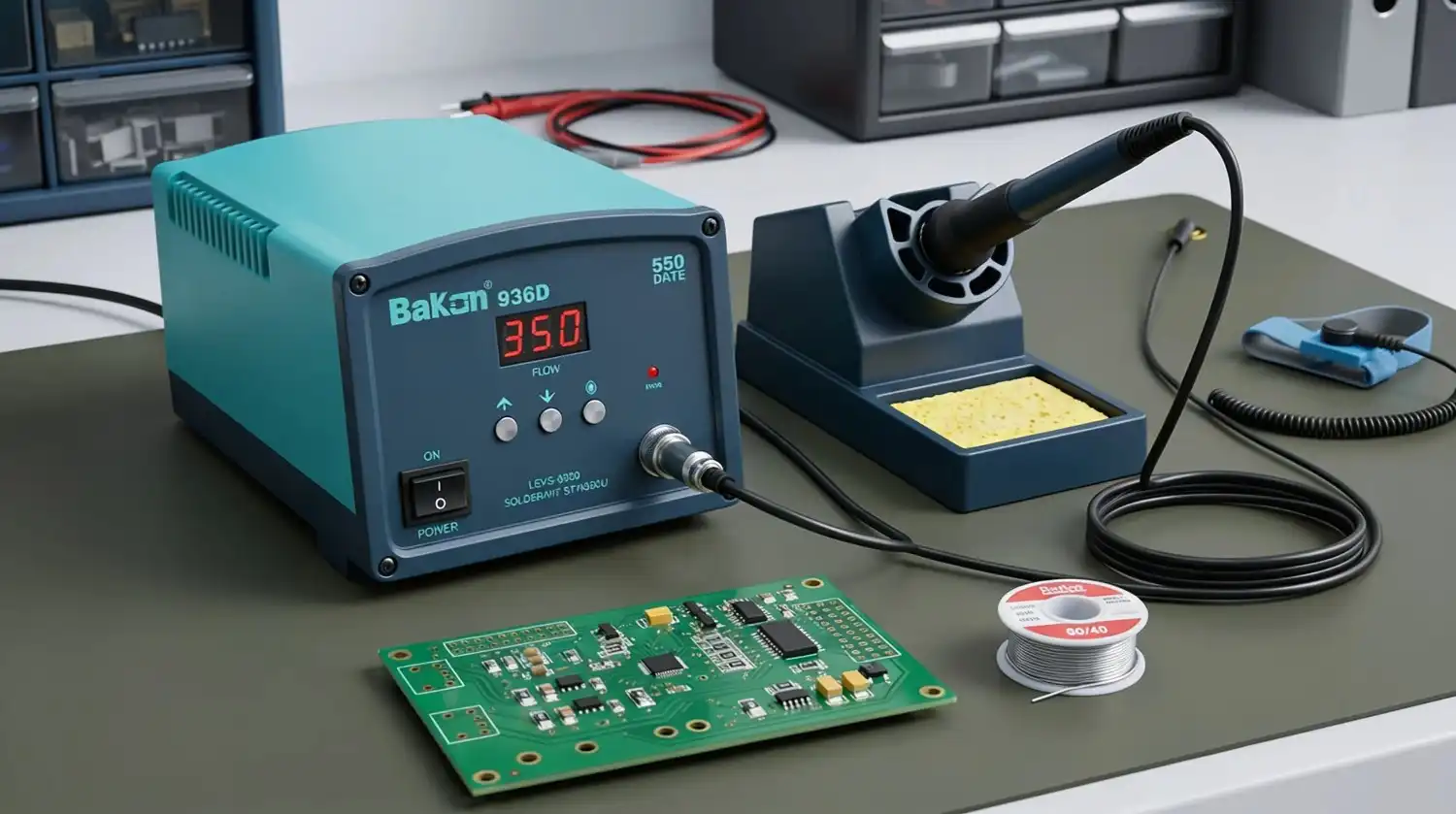
Walk into almost any electronics workshop and you'll spot one tool sitting right at the centre of the bench. A Soldering Station Pick the wrong one and it'll quietly drag down your whole production line — nobody notices until the rework pile starts growing. Cold joints. Damaged components. Operators just standing there waiting for a tip to heat up. This guide isn't theory. It's what to actually check before you buy, what types exist, and how to match the unit to your real workload — not whatever's on the spec sheet.
Here's the thing — most procurement teams just reorder whatever was bought last time. Nobody stops to ask if it still fits. Boards keep getting denser, components smaller, tolerances tighter. A unit that was fine five years back might be the actual bottleneck today. A few extra minutes spent checking this now saves real hours on the floor later.
What is a Soldering Station?
Put simply, a Soldering Station is a self-contained unit — heating element, temperature controller, and handpiece, all in one. Not like a basic soldering iron at all. It lets the operator set and hold a precise temperature, and that matters a lot when you're working close to sensitive PCB components.
Industrial-grade setups usually throw in interchangeable tips, a stand, sometimes even a built-in sponge or wire cleaner. Reliable Spares & Consumables builds these for the production floor first — bench-top convenience comes second.
Why is it Important?
Temperature consistency — that's really the whole game here. Go too hot and you lift pads, cook components. Too cold, and the joint turns dull and brittle, never holds right. Pick the correct unit and you get:
- Less rework from weak or cracked joints
- Components staying safe from thermal shock
- Tips lasting longer because the heating stays stable
- Faster throughput on repetitive assembly work
- Shorter training time — digital controls are just easier to standardise
Skip this decision, or buy purely on price, and it almost always costs more later — through downtime, through rework, through frustrated operators.
Types and Variants
Not every floor needs the same setup. Roughly, here's how it splits:
- Analog stations — dial-based control, cheaper, fine for light repair work
- Digital Soldering Station units — digital readouts, programmable presets, built for repetitive industrial use
- Hot air rework stations — pairs soldering with hot air, mainly for SMD work
- Bakon soldering station ranges — well known on Indian assembly lines for steady heat recovery and tips that actually last
- Quick soldering station models — built around fast heat-up cycles, where speed is the priority
Each one solves a different problem. Matching the type to the actual task matters far more than chasing whatever's the most advanced model on the shelf.
Features to Look For
Run through this before placing any order:
- Temperature range and stability — tight tolerance matters more than a wide range on paper
- ESD-safe construction — non-negotiable for an ESD-protected workspace
- Tip variety and availability — check spares are easy to find, not just available once
- Sleep or auto-cool modes — saves the tip, saves power too
- Handpiece build quality — light, heat-resistant cabling makes a real difference on long shifts
- Display clarity — a Digital Soldering Station with a clean readout cuts down operator error
- After-sales support — make sure your Soldering Station Supplier actually services what they sell
Trivia: Electric soldering irons go back as far as the late 1800s — long before anyone thought of temperature-controlled stations.
Product Overview
Among the more trusted picks across PCB assembly and repair work in India, the Bakon Soldering Station range stands out — mainly for heat recovery that stays consistent even under continuous use. Most pair a ceramic heating core with ESD-safe housing, which works well in controlled environments where static could otherwise wreck a sensitive board.
Running multiple shifts? A Quick Soldering Station setup cuts idle time between joints — sounds small, but it adds up fast across an eight-hour shift.
Benefits
Get the Soldering Equipment right and the returns go beyond just cleaner joints:
- Lower maintenance cost over time — fewer tip failures
- Joint quality stays consistent across different operators
- Less component damage from overheating
- Faster onboarding — digital presets help new technicians get up to speed
- Safer floor overall, with auto-shutoff and ESD-safe builds
Applications and Use Cases
Not limited to one industry at all. Some common ones:
- PCB assembly and rework in manufacturing units
- Repair and maintenance work on consumer electronics
- Training labs teaching soldering basics
- Automotive electronics assembly
- Telecom servicing and field repair kits
A lot of EMS facilities also keep a smaller backup unit around — just in case. Even a short outage on the main station can stall a whole batch, and a second, lower-capacity unit costs far less than a stalled shift.
Comparison Table
Here is the comparison table:
| Station Type | Temperature Control | Best Suited For | Typical Workload |
|---|---|---|---|
| Analog Soldering Iron Station | Dial-based, moderate accuracy | Light repair, hobby use | Low to medium |
| Digital Soldering Station | Precise, programmable presets | Industrial PCB assembly | Medium to high |
| Bakon Soldering Station | High heat recovery, ESD-safe | Continuous production lines | High |
| Quick Soldering Station | Fast heat-up cycles | Time-sensitive assembly tasks | High |
Expert Tips and Buying Guide
Now here are some expert tips and a guide.
- Match the wattage to your typical board size — oversized units just waste energy on small jobs
- Check whether your Soldering Station Dealers actually stock genuine tips, not generic look-alikes
- Mixed workload? A mid-range digital unit usually beats a high-end analog one
- Test the handpiece grip and cable flex before ordering for the whole floor
- Ask your Soldering Station Supplier about calibration — drift over time hurts joint quality more than people expect
Reliable Spares and Consumables
Reliable Spares & Consumables, lead by Mr.JK Khowal, possesses 19 years of experience in the industry, including manufacturing and supplying ESD products and industrial electronics tools in India. With their own manufacturing facility and expertise, they are one of the leading providers of customised ESD solutions, best soldering stations, BGA rework stations, ESD chairs, testers and ESD static control consumables that meet customer needs in the electronics manufacturing sector.Reliable Spares & Consumables manufactures the products using tested components and guarantees the best performance and lifespan with stringent in-house testing facilities and conformity to industry standards. With comprehensive OEM and bulk supplying options available, as well as a well established and efficient distribution channel nationwide. They are able to supply their goods promptly across India and improve workplace safety and productivity in offices.
FAQs
1. What is a soldering station?
Ans: A soldering station is a complete setup with a heating element, temperature control, and handpiece all in one. It lets you hold a precise temperature, unlike a basic iron, which matters when working close to sensitive electronic components on a board.
2. Where to buy a soldering station?
Ans: You can buy directly from Reliable Spares & Consumables, a trusted Soldering Station manufacturers offering genuine after-sales support. They provide spare parts, proper calibration, and timely delivery, so you're not stuck guessing about quality or servicing later.
3. How to use a soldering station?
Ans: Set the desired temperature, let the tip heat fully, then apply solder to the joint with steady, controlled contact. Clean the tip often, match tip size to the task, and power the unit down safely once your soldering session is finished.
4. How long does a soldering station tip usually last?
Ans: It depends on usage and upkeep. With regular cleaning and sensible temperature settings, tips can run for several months under daily use. Push the heat too high too often, though, and tips wear out a lot faster than expected.
5. Is a digital soldering station better than an analog one?
Ans: For industrial or repetitive work, yes — digital units hold temperature tighter and cut operator error. For occasional hobby or light repair use, analog still works fine. It mostly comes down to how often the unit gets used daily.
6. Can a soldering station be used for SMD components?
Ans: A standard soldering station handles many SMD jobs, but tight spacing often needs hot air rework stations alongside it. Pairing both gives better control over delicate, closely packed components without risking heat damage to nearby parts.
Conclusion
Picking the right unit isn't about grabbing whatever's priciest on the catalogue page. It comes down to heat control, build quality, and how reliable the supplier actually is — matched against your daily workload. One repair bench or a full assembly line, doesn't matter. The right Soldering Tools are what separate steady output from constant rework. Think about shift length, how sensitive your components are, and tip availability before you finalise anything.
A bit of homework before purchase really pays off. Talk to the technicians who'll actually use it every day, ask for a demo if you can get one, and weigh heat recovery claims against real feedback — not just catalogue numbers. Get this right once, and the line runs smoothly for years.
Looking for dependable, production-ready soldering stations? Get in touch with our team for guidance tailored to your workshop's exact requirements. Contact us today!